
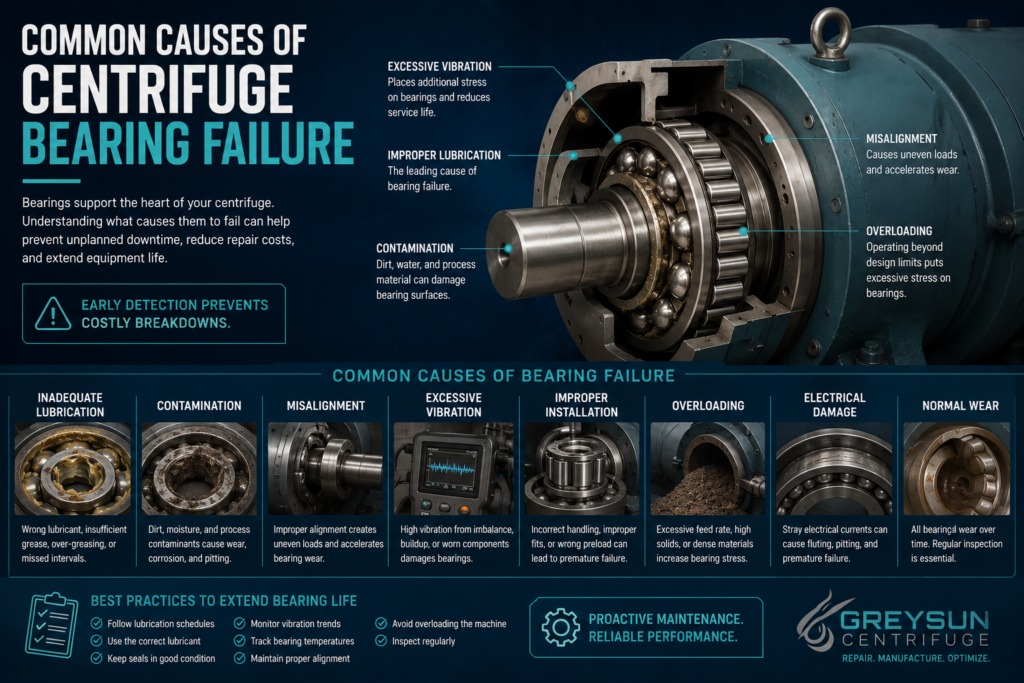
Common Causes of Centrifuge Bearing Failure
Understanding Why Bearings Fail and How to Prevent Costly Downtime
Bearings are one of the most critical components in any decanter centrifuge. They support the rotating bowl and conveyor while allowing the machine to operate at extremely high speeds under heavy loads. When a bearing begins to fail, it rarely happens without warning. Increased vibration, rising temperatures, unusual noise, and declining performance are often early indicators of a developing problem.
Ignoring these warning signs can lead to catastrophic failures, unplanned downtime, and expensive repairs. Understanding what causes bearing failure can help maintenance teams identify issues early and extend the life of their centrifuge.
Why Bearings Matter
A decanter centrifuge may operate continuously for thousands of hours while rotating at speeds exceeding 3,000 RPM. During operation, the bearings support significant radial and axial loads while maintaining precise alignment of the rotating assembly.
Because of these demanding operating conditions, proper bearing maintenance is essential for reliable performance.
- Inadequate Lubrication
One of the leading causes of bearing failure is improper lubrication.
Bearings depend on a thin film of grease or oil to reduce friction and dissipate heat. Without adequate lubrication, metal surfaces begin contacting each other directly, causing rapid wear and excessive heat generation.
Common Causes
Missed lubrication intervals
Incorrect lubricant type
Insufficient grease quantity
Over-greasing
Lubrication contamination
Warning Signs
High bearing temperatures
Increased vibration
Grinding or squealing noises
Premature wear
Prevention
Follow the manufacturer’s lubrication schedule and always use the recommended lubricant. Monitor lubrication systems regularly to ensure proper operation.
- Contamination
Dust, water, chemicals, sludge, and process materials can enter the bearing housing if seals become damaged or maintenance procedures are not followed.
Even microscopic contaminants can damage bearing surfaces and significantly reduce bearing life.
Common Sources
Failed seals
High-pressure washdowns
Dirty lubrication practices
Moisture intrusion
Process leaks
Warning Signs
Discolored grease
Corrosion
Rough bearing operation
Increased operating temperature
Prevention
Maintain seal integrity and keep lubrication systems clean during servicing.
- Misalignment
Bearings are designed to operate under specific loading conditions. When shafts become misaligned, uneven loads develop across the bearing surfaces.
This increases friction, heat, and wear.
Causes
Improper installation
Bent shafts
Foundation movement
Worn drive components
Improper coupling alignment
Warning Signs
Uneven bearing wear
Belt wear
Elevated vibration
Increased operating temperatures
Prevention
Check shaft alignment whenever major repairs or drive component replacements are performed.
- Excessive Vibration
High vibration levels place additional stress on bearings.
Vibration may result from:
Bowl imbalance
Product buildup
Damaged scroll
Worn gearbox
Loose foundation
Drive system issues
Over time, excessive vibration damages bearing races and rolling elements.
Warning Signs
Increasing vibration trends
Bearing noise
Reduced equipment reliability
Prevention
Monitor vibration levels routinely and investigate any changes before damage progresses.
- Improper Installation
Even new bearings can fail prematurely if installed incorrectly.
Common installation mistakes include:
Hammering bearings onto shafts
Improper heating methods
Incorrect preload
Improper fits
Misalignment during assembly
Small installation errors often result in significantly reduced bearing life.
Prevention
Use proper installation tools and follow manufacturer specifications during assembly.
- Overloading the Centrifuge
Operating beyond the designed process capacity places additional loads on the rotating assembly and bearings.
Overloading may occur from:
Excessive feed rates
High solids concentration
Dense materials
Process upsets
Warning Signs
High motor load
Increased vibration
Reduced separation efficiency
Higher bearing temperatures
Prevention
Operate within the equipment’s design specifications and avoid sudden process changes.
- Electrical Damage
Electrical current passing through bearings can damage rolling elements and bearing races.
This is more common on variable frequency drive (VFD) applications where stray electrical currents may pass through the shaft.
Warning Signs
Fluted bearing races
Premature bearing failure
Electrical pitting
Prevention
Use shaft grounding devices and follow proper electrical installation practices.
- Normal Wear
Even under ideal operating conditions, bearings have a finite service life.
Years of continuous operation eventually produce normal fatigue on the bearing surfaces.
Warning Signs
Gradual increase in vibration
Increased noise
Higher operating temperatures
Prevention
Monitor bearing condition regularly and replace bearings during scheduled maintenance before failure occurs.
Recognizing Early Warning Signs
Most bearing failures provide advance warning.
Watch for:
Increasing vibration
Higher bearing temperatures
Grinding or rumbling sounds
Lubrication leaks
Increased power consumption
Reduced centrifuge performance
Abnormal noise during startup
Metal particles in lubricant
Identifying these symptoms early can prevent extensive damage to the bowl, conveyor, gearbox, and drive system.
How to Extend Bearing Life
Proper preventive maintenance is the best way to maximize bearing life.
Recommended practices include:
Follow lubrication schedules
Use the correct lubricant
Inspect seals regularly
Monitor vibration trends
Monitor bearing temperatures
Maintain proper shaft alignment
Avoid overloading the machine
Replace worn drive components promptly
Perform routine inspections
A proactive maintenance program can significantly reduce downtime and lower long-term operating costs.
When Should Bearings Be Replaced?
Bearings should never be operated until complete failure.
Replacement should be considered when inspections reveal:
Excessive vibration
Elevated temperatures
Excessive internal clearance
Visible wear
Corrosion
Lubrication contamination
Unusual operating noise
Replacing bearings during planned maintenance is almost always less expensive than repairing damage caused by catastrophic bearing failure.
How Greysun Can Help
At Greysun Centrifuge, we’ve repaired and remanufactured centrifuges from virtually every major manufacturer. Our technicians routinely inspect bearing assemblies, diagnose vibration issues, and restore equipment to peak operating condition.
Whether you need bearing replacement, vibration analysis, a complete centrifuge rebuild, or emergency repair services, Greysun has the experience and equipment to get your operation back online quickly.
Our goal is not only to repair your centrifuge—but to identify the root cause of the failure and help prevent it from happening again.
Frequently Asked Questions
What is the most common cause of centrifuge bearing failure?
Improper lubrication is one of the most common causes. Using the wrong lubricant, insufficient lubrication, over-greasing, or contamination can all dramatically shorten bearing life.
Can a failing bearing cause high vibration?
Yes. As a bearing wears, internal clearances increase and vibration levels typically rise. Monitoring vibration is one of the best ways to detect early bearing problems.
How often should centrifuge bearings be inspected?
Inspection frequency depends on operating hours, process conditions, and the manufacturer’s recommendations. Facilities running continuous operations often monitor bearing temperature and vibration daily, with more detailed inspections performed during scheduled maintenance outages.
Can a damaged bearing affect separation performance?
Absolutely. Bearing wear can lead to increased vibration, reduced stability, and improper alignment of the rotating assembly, all of which can negatively impact separation efficiency and overall machine reliability.