
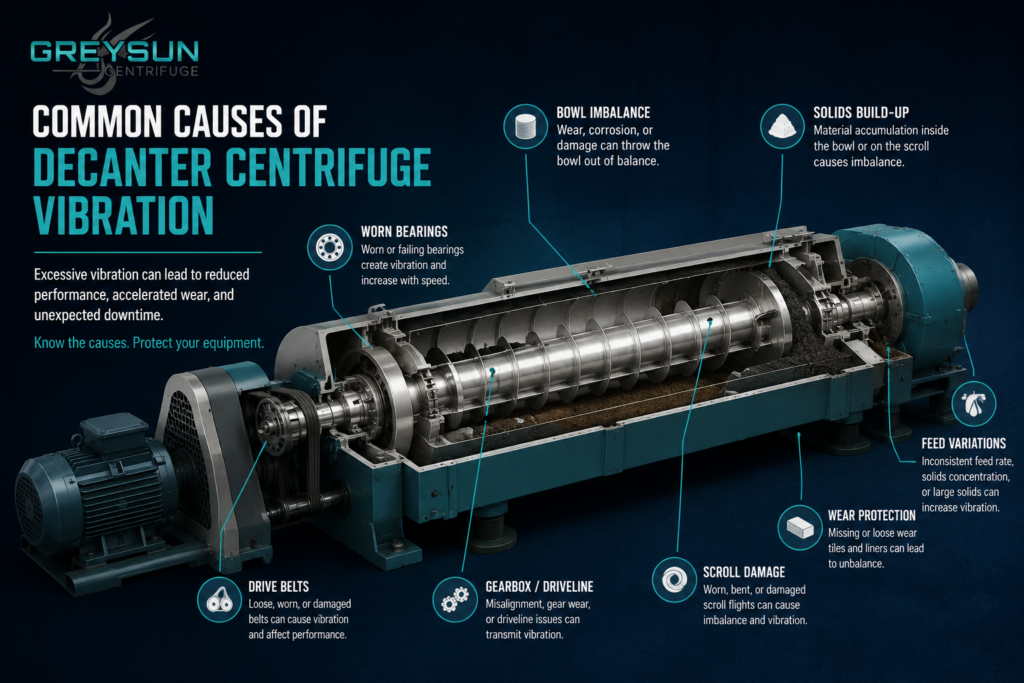
Understanding the Most Common Causes of Excessive Vibration
A decanter centrifuge is designed to operate at extremely high rotational speeds while maintaining smooth, stable operation. When vibration levels begin to increase, it is often an early warning sign that something within the machine or process has changed.
Ignoring excessive vibration can lead to accelerated wear, reduced separation performance, unexpected downtime, and, in severe cases, catastrophic equipment failure.
Understanding the most common causes of centrifuge vibration can help operators identify problems early and minimize costly repairs.
- Product Build-Up Inside the Bowl
One of the most common causes of vibration is an uneven buildup of solids inside the rotating assembly.
Sticky products, polymer buildup, scale, or hardened sludge can accumulate inside the bowl or on the scroll. As the buildup increases, the rotating assembly becomes unbalanced, causing vibration to rise.
Signs
Gradually increasing vibration
Reduced separation efficiency
Vibration that improves after cleaning
Solution
Regular cleaning and inspection of the bowl, conveyor, and discharge ports can prevent material buildup before it affects machine balance.
- Worn Bearings
Bearings support both the rotating bowl and conveyor. Over time, normal wear, contamination, poor lubrication, or excessive operating loads can damage bearing surfaces.
As bearings deteriorate, vibration levels typically increase.
Signs
Grinding or rumbling noises
Increased bearing temperatures
Progressive vibration increase
Lubrication leaks
Solution
Routine bearing inspections and vibration monitoring can identify problems before bearing failure occurs.
- Bowl Imbalance
Because a decanter centrifuge operates at thousands of RPM, even a small imbalance can produce significant vibration.
Common causes include:
Uneven wear
Corrosion
Mechanical damage
Missing wear protection
Improper repairs
Signs
High vibration immediately after startup
Vibration increases with speed
Machine cannot reach operating RPM
Solution
A damaged or worn bowl should be professionally inspected and dynamically balanced.
- Scroll Damage or Wear
The conveyor scroll rotates inside the bowl at a slightly different speed. If the scroll flights become worn, bent, or damaged, the rotating assembly may lose balance.
Excessive wear can also reduce solids conveying efficiency.
Signs
Reduced cake dryness
Increased vibration
Lower processing capacity
Solution
Inspect scroll flights during routine maintenance and repair or replace worn components as needed.
- Damaged Wear Protection
Many industrial centrifuges use tungsten carbide tiles, ceramic liners, or hard-facing to protect high-wear areas.
If these wear components become loose, cracked, or missing, the rotating assembly can become unbalanced.
Signs
Sudden vibration increase
Visible wear inside the bowl
Uneven solids discharge
Solution
Inspect wear protection during scheduled maintenance and replace damaged components promptly.
- Misalignment
Improper alignment between the motor, gearbox, belts, or drive components can introduce vibration throughout the machine.
Although the bowl may remain balanced, the drive system can still transmit vibration into the frame.
Signs
Belt wear
Pulley wear
Coupling damage
Vibration near the drive end
Solution
Check motor alignment, pulley alignment, and belt tension during preventive maintenance.
- Drive Belt Problems
Loose, worn, or damaged drive belts can generate vibration that resembles internal mechanical problems.
Signs
Belt dust
Squealing
Speed fluctuations
Uneven belt wear
Solution
Inspect belt condition regularly and replace belts as a matched set when necessary.
- Foundation or Mounting Problems
A centrifuge requires a rigid, properly designed foundation.
Loose anchor bolts, deteriorated grout, or structural movement can amplify vibration levels.
Signs
Vibration increases under load
Visible frame movement
Loose mounting hardware
Solution
Inspect anchor bolts, baseplates, and foundation integrity during maintenance inspections.
- Feed Variations
Changes in the feed material can also create vibration.
Examples include:
Large solids entering the machine
Excessive feed rate
Air entering the feed system
Highly inconsistent solids concentration
Although these conditions may not indicate equipment damage, they can temporarily increase vibration.
Solution
Maintain consistent feed conditions and avoid sudden process changes whenever possible.
- Critical Component Failure
In severe cases, excessive vibration may indicate major internal damage such as:
Broken scroll flights
Damaged gearbox
Cracked rotating components
Shaft damage
Mechanical contact between rotating parts
These conditions require immediate shutdown and professional inspection.
Why Vibration Monitoring Matters
Modern centrifuges are often equipped with vibration sensors that continuously monitor machine health.
An increase in vibration rarely occurs without a reason. Monitoring vibration trends allows maintenance teams to identify developing problems before they become catastrophic failures.
Early detection can:
Reduce repair costs
Prevent unexpected downtime
Extend equipment life
Improve operating reliability
Increase plant safety
Preventing Excessive Vibration
The best way to minimize vibration is through routine preventive maintenance.
Recommended practices include:
Monitor vibration levels regularly
Inspect bearings and lubrication systems
Clean the bowl and conveyor
Inspect wear protection
Check belt condition and alignment
Verify foundation integrity
Monitor operating temperatures
Schedule periodic professional inspections
Routine maintenance not only improves reliability but also helps maximize separation performance and extend the life of the centrifuge.
When Should You Call a Centrifuge Specialist?
If vibration levels increase suddenly or continue to rise over time, the machine should be inspected before additional damage occurs.
Professional vibration analysis can identify the root cause and help determine whether the issue is related to product buildup, bearing wear, imbalance, drive components, or internal mechanical damage.
At Greysun Centrifuge, our technicians specialize in diagnosing, repairing, and remanufacturing industrial centrifuges from all major manufacturers. Whether you need vibration analysis, emergency repairs, replacement parts, or a complete rebuild, our team has the experience to restore your equipment to peak performance.